
The health pillar you are probably ignoring
Apr 20, 2026
I'm writing this from LA, by myself, in between keynotes. The Californian coast has been genuinely wonderful to explore. But it's also been a little lonely.
Which is an odd thing to admit when one of the key tools I've been talking about is connection. But just because I share the tools doesn't mean I'm immune to it. Instead of falling into the easy rhythms of connection I'd have at home, I've had to reach out to new people. In coffee lines, wait lines at SXSW (who knew lines could be such a source of connection) and through old friends. That feeling of loneliness doesn't solve itself by sitting there, you have to actively reach out, just like you did on the school playground once upon a time.
Social health is the missing health pillar
Physical health has its badges, the gym bag, the Strava trails. Mental health is slowly but surely moving into conversation, where asking "are you okay?" is no longer just for one day. Social health, however, has lagged behind, with a counterfeit version giving the impression of connection but falling short of the genuine thing.
The World Health Organisation now classifies loneliness as a global public health crisis, linked to over 871,000 deaths each year. Loneliness raises your risk of heart attack by 29%, stroke by 32%, and dementia by 31%. And in Australia, one in three of us is affected.
We have nationwide conversations about exercise and heart disease, so why aren't we talking about loneliness and the heart?
Your brain is built for connection.
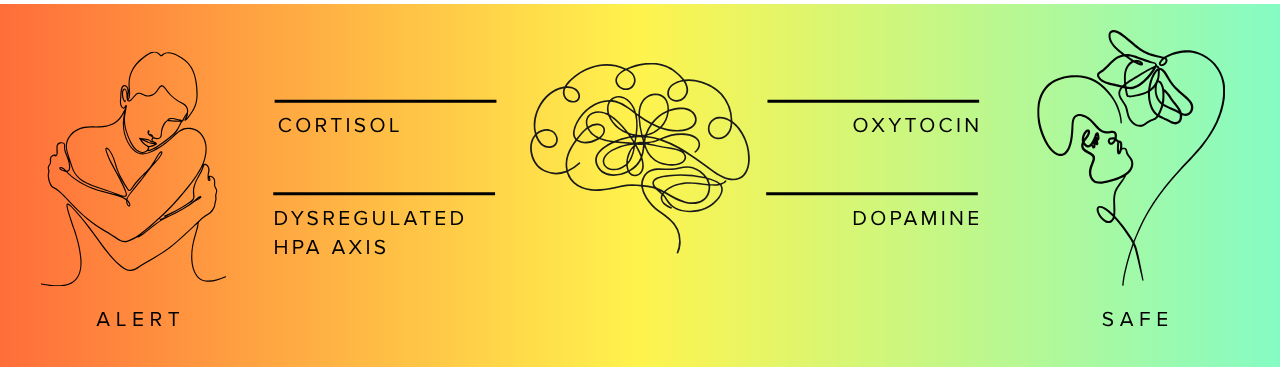
There's a reason that loneliness doesn't just feel bad, it is bad for you. Neuroscience tells us that when we feel genuinely connected to someone, our brains release oxytocin, the chemical that dials down our threat response and makes us feel safe. Dopamine is also involved, which is why a good conversation can leave you on a high. But when connection drops away, cortisol and a dysregulated HPA axis takes over. Inflammation rises. Your nervous system shifts into a low-grade state of alert that chips away at your immune system, and with time, your cognition declines.
Try these four things to improve your social health:
Know the difference between contact and connection. Scrolling instagram doesn’t count. Your brain needs something real. One proper conversation a day where you go beyond surface level. Ask a question you're actually curious about. Put the phone away. Be in the room with someone, even if the room is a line at a conference.
Go first. Most of us are waiting for someone else to start the conversation. Be the one who reaches out first, even if it feels a little scary. It'll be awkward for about ten seconds but what interesting thing could you learn after?
Look after the outer circle too. Decades of research tell us we need close relationships built on trust and history, but we also need the broader web of people who bring fresh thinking, new opportunities and different perspectives. The loose connections matter more as much as the close connections.
Build social recovery into your week. We accept that high performance needs physical recovery- rest days, sleep, nutrition. Social recovery is just as real. A standing coffee with a mate. A weekly call with someone who gets you. A community you show up to consistently. The format doesn't matter. The consistency does.
Next time you're in the office, look around. Someone on your team is feeling exactly the way I felt on that Californian coastline. Be the person who says something.
Get more tips on how to support your social health with Chelsea’s keynotes
References:
- WHO Commission on Social Connection. (2025). From loneliness to social connection: charting the path to healthier societies. World Health Organization.
- Lim, M., Smith, B., Owen, K., Engel, L., Qualter, P., & Surkalim, D. (2023). State of the Nation Report: Social Connection in Australia 2023. Ending Loneliness Together.
- Holt-Lunstad, J. (2024). Social connection as a critical factor for mental and physical health: evidence, trends, challenges, and future implications. World Psychiatry, 23(3), 312–332.