
The 10 minute skill that builds resilience
Aug 27, 2026
Every single person has moments where they are walking a tightrope. You are either keeping balance above it, or precariously dangling below it. How you recover, is how you build resilience
Above / below the line thinking was first talked about by Robert Kiyosaki before getting built on by the Conscious Leadership Group. It’s a framework I teach teams to use to interrupt unhelpful thoughts.
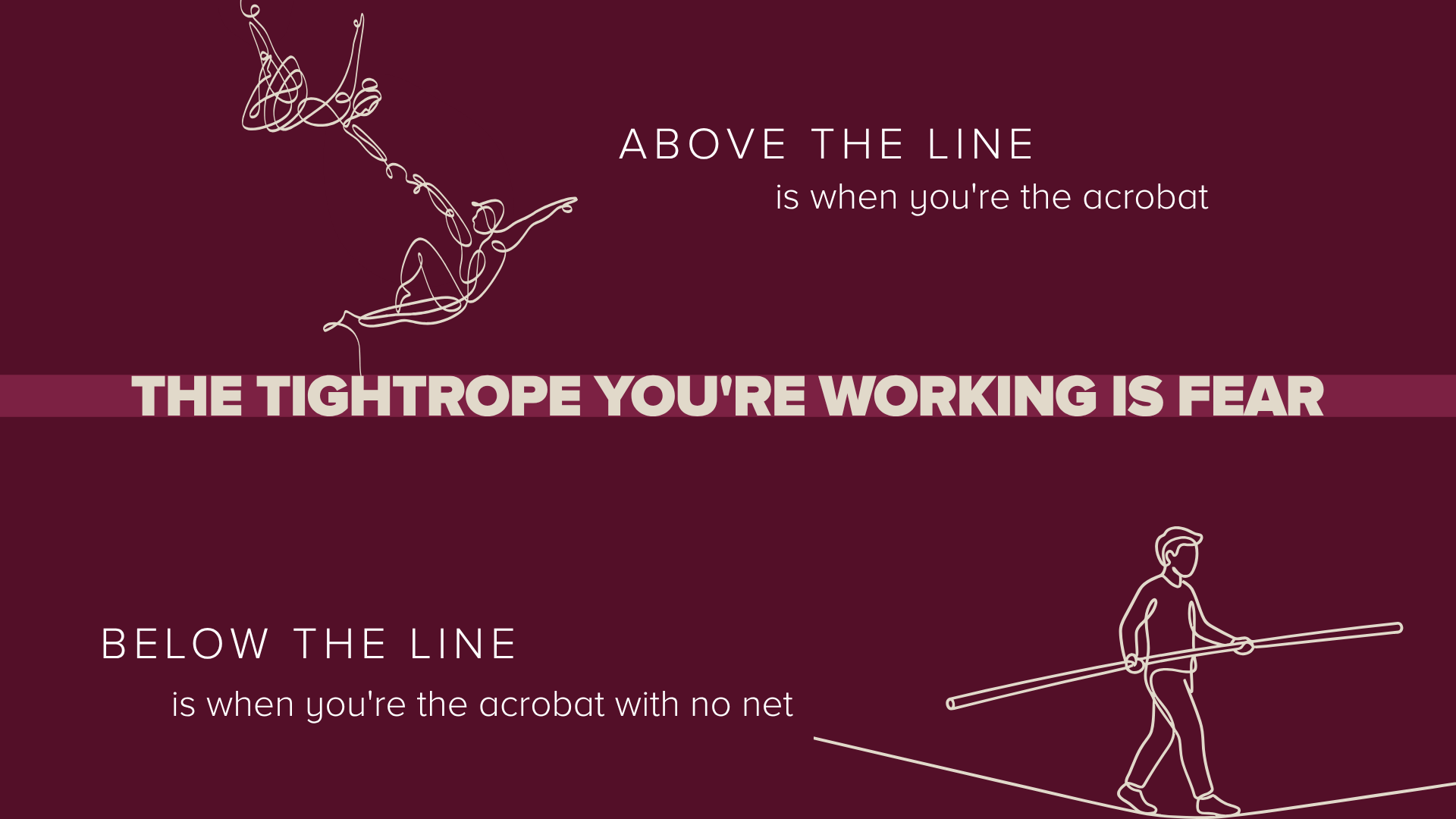
Above the line is when you're the acrobat. You notice the fear and adrenaline running through you but your skills and hours of practice put you in control of the path you're walking. Below the line is when you're the acrobat with no net. Fear's making the decisions instead of you and you’re gripping the rope not moving.
The acrobat isn’t only ever on one side of the tightrope, they wobble, fall and get back. The skill isn’t walking above the line, it’s being able to reorient and get back up when you fall below the line.
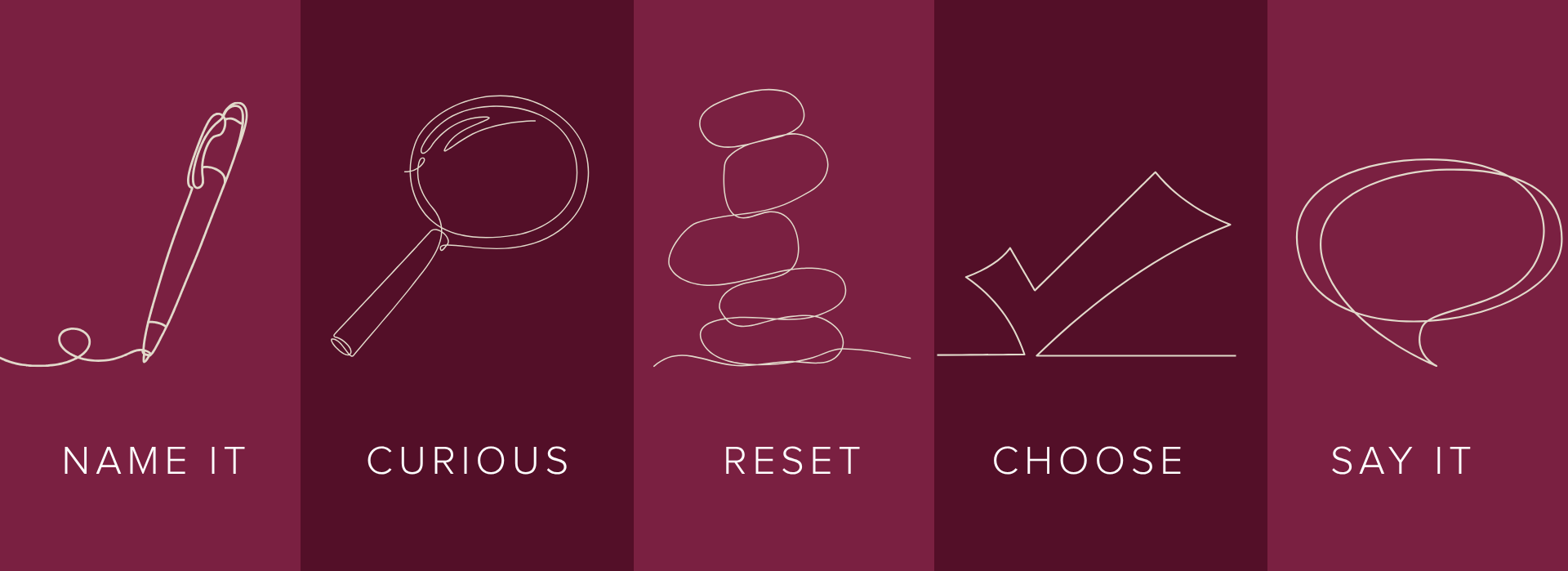
That skill is practicable. Here are the five things to do when you feel yourself wobble off that tightrope:
1. Name it:
The moment you catch yourself thinking "why does this always happen to me," you've found your Below the line voice. I call the usual suspects the Martyr ("fine, I'll just do it myself"), the Moaner ("typical"), and the Monster ("not my problem"). Naming which one has shown up in your head gives you the opportunity to interrupt them. Say (it in your head or out loud) I'm below the line right now.
2. Get curious:
After you have acknowledged where you are, try to understand how you arrived there. Turn your ‘why is this happening to me’ into ‘what am I actually reacting to’? You can’t be curious and defensive at the same time. Choose to be curious so you get back above the line faster.
3. Reset your nervous system
When you drop below the line, blood moves away from your prefrontal cortex (the rational, decision-making part of your brain) and toward your limbs, prepping you to fight or flee. While that helps you when getting chased by a lion, it is unhelpful in your Monday team meeting. The fastest scientifically-backed way to reset your nervous system is through a physiological sigh. Take two short inhales through your nose and one long exhale through your mouth.
4. Choose who takes control next
Every Below the line persona has an Above the line counterpart.
- The Martyr becomes the Creator ("okay, what can I actually do here?").
- The Moaner becomes the Challenger ("what can we learn so this doesn't happen again?").
- The Monster becomes the Coach ("how can I help you fix this?").
Both personas are triggered the same way but take completely different actions. I've had my assistant double book me, and I've watched myself go from "I'll just manage my own calendar from now on" (Martyr) to "I know this doesn't happen often, can we look at how it happened and build a process so it doesn't happen again?" (Creator) in the space of one physiological sigh.
5. Say it out loud
Noticing you are below the line is easy, saying it and sharing it with your team is hard, but it’s what ultimately strengthens trust and psychological safety. It can help pause decision making when the wrong persona is at the reins and explicitly communicates where you are so everyone can work together to make the right next choice.
The framework isn’t just for meetings. My daughter Clara is eleven and when I asked her what gets her back above the line after a meltdown, she said: "Tell me you love me, feed me snacks, and buy me a horse." Not exactly a repeatable strategy but strip out the horse and she can name exactly what she needs in under thirty seconds. Most adults don’t do that but they can learn to.
You won’t master this on the first try. I haven't. But like the acrobat, the practice of being able to pull yourself above the line (and even making it a part of your practice when you fall), is the true skill.
Train your team to become more resilient with Chelsea Pottenger's mindset and leadership keynotes: https://www.eqminds.com/speaker
Frequently asked questions:
What is "above the line, below the line" thinking?
It's a framework for noticing whether fear is in the driver's seat or you are. Above the line, you're aware of the fear but still choosing your actions. Below the line, fear is making the decisions for you.
What's a simple resilience technique to use in a stressful meeting?
Name what you're feeling, get curious about the trigger instead of defensive, take a physiological sigh to reset, then consciously choose your next response.
What is a physiological sigh and how does it reduce stress?
A physiological sigh is a breathing technique, two short inhales through the nose followed by one long exhale through the mouth. It's considered one of the fastest ways to calm the nervous system in the moment.